
One of the most common questions I hear from new guitar players is: “How often should I practice?”
It’s a reasonable question. Whether you’re an adult learning guitar for the first time, returning after years away from the instrument, or helping a child learn, you want to know how much practice is enough.
Many beginners assume that progress comes from practicing for long periods. Others worry that if they can’t find an hour every day, they won’t improve at all.
After more than 40 years of playing and teaching guitar, I’ve found that the answer is usually much simpler than people expect: Consistent practice matters far more than long practice sessions.
The players who make steady progress are rarely the ones who practice the longest. They’re the ones who practice regularly and follow a clear plan.

Consistency Beats Intensity
When students first start learning guitar, motivation is often high. It’s common to practice for an hour or two one day and then skip the next several days because life gets busy. Unfortunately, that approach doesn’t usually lead to steady improvement.
Guitar playing involves developing several skills at the same time:
- Finger strength
- Hand coordination
- Muscle memory
- Rhythm
- Listening skills
These abilities develop gradually through repeated exposure. Short, regular practice sessions give your brain and hands frequent opportunities to reinforce what you’re learning.
Think of it like learning a new language. A little practice every day is generally more effective than cramming once a week.
How Much Practice Is Enough?
The good news is that beginners don’t need marathon practice sessions.
For most new players, a reasonable goal is:
- 15–20 minutes per day for absolute beginners
- 20–30 minutes per day for developing players
- Longer sessions when time and interest allow
Of course, these are general guidelines, not rules. Some students have demanding jobs, family responsibilities, or busy schedules. Others may have more time available. The important thing is establishing a routine you can realistically maintain.
A student who practices 15 minutes five days a week will often make more consistent progress than someone who practices two hours on Saturday and doesn’t touch the guitar again until the following weekend.
What Should You Do During Practice?
Another common mistake is spending practice time without a clear purpose.
I’ve worked with many students who tell me they’ve been practicing regularly but don’t feel like they’re improving. Often, the issue isn’t the amount of practice. It’s the lack of structure.
A productive practice session might include:
Why Rest Days Are Okay
Many beginners worry that missing a day will ruin their progress. Fortunately, that’s not how learning works.
Life happens. Work schedules change. Kids get sick. Vacations come along. Missing an occasional practice session isn’t a problem.
What matters is returning to your routine instead of viewing a missed day as failure.
In fact, short breaks can sometimes be helpful. The brain continues processing new skills between practice sessions. Many students have experienced the pleasant surprise of struggling with something one day and finding it noticeably easier a day or two later.
The goal isn’t perfection. The goal is consistency over time.
Progress Isn’t Always Visible
One thing I’ve learned from teaching hundreds of students is that progress often feels slower than it actually is. Many players become discouraged because they focus on what they still can’t do instead of noticing what has improved.
These small improvements can be easy to overlook because they happen gradually.
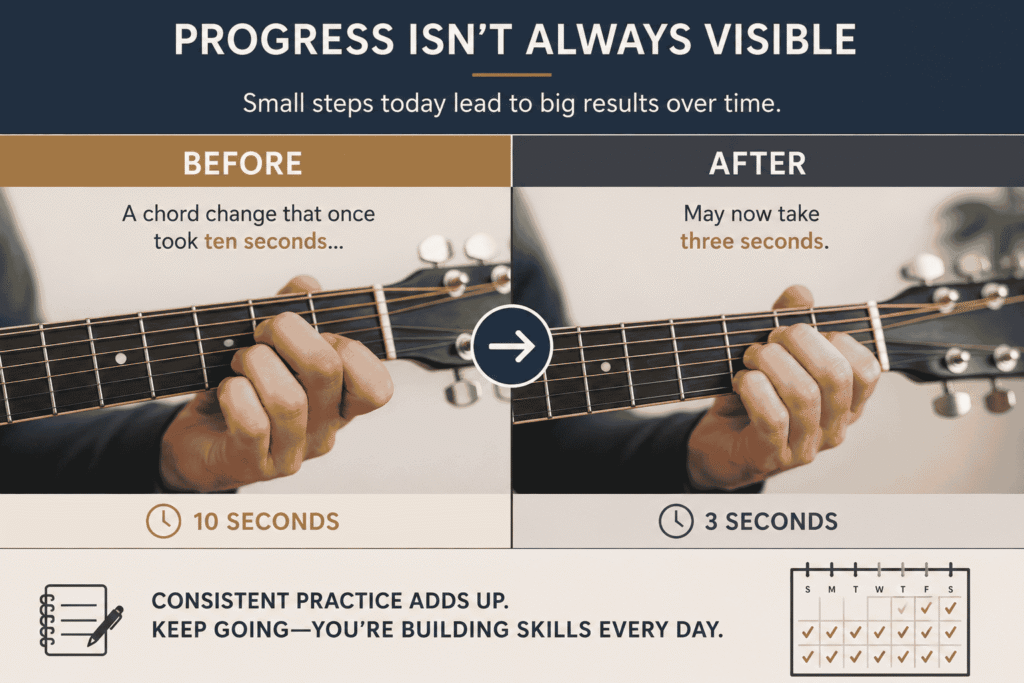
That’s one reason a step-by-step learning approach is so valuable. It helps students focus on the next achievable goal rather than comparing themselves to more experienced players.
Every student learns at a different pace. Age, previous musical experience, available practice time, and individual learning styles all play a role.
Comparing your progress to someone else’s rarely provides useful information.
The Practice Habit Matters Most
If I could give every beginner one piece of advice, it would be this: Make guitar part of your regular routine.
A guitar sitting on a stand where you can easily pick it up often gets played more than one stored in a case. A short daily practice habit is usually easier to maintain than waiting for large blocks of free time. And a clear learning path helps remove the uncertainty of wondering what to practice each day.
Over time, those small practice sessions add up in meaningful ways. The students who continue progressing year after year are rarely the ones chasing quick results. They’re the ones who keep showing up, practicing consistently, and building one skill at a time.
Conclusion
So, how often should you practice guitar?
For most beginners, the best answer is simple: practice as consistently as your schedule allows, even if the sessions are short.
Fifteen focused minutes several times a week can be far more productive than occasional marathon sessions. Remember that guitar is a skill developed over time. Progress comes from steady effort, patience, and following a clear path rather than trying to learn everything at once.
Keep your expectations realistic, celebrate small improvements, and focus on building a practice habit you can maintain. Those habits often become the foundation for long-term musical growth and enjoyment.
About the Author
Daryl is the creator of the FretSteps Guitar Method and has over 25 years of playing and teaching experience. He helps beginner and developing guitar players learn through a structured, step-by-step approach designed to build confidence and lasting musical skills.