
One of the most common questions I hear from new students is:
“How long will it take me to learn guitar?”
The answer depends on what you mean by learn guitar.
Quick Answer
Most students can learn basic chords and strumming within their first month, play simple songs within a few months, and become comfortable recreational players within about a year. Progress depends far more on consistent practice and following a clear learning path than on natural talent.
If your goal is to become the next Eddie Van Halen, that’s a lifelong journey. If your goal is to play songs around a campfire, accompany yourself while singing, or enjoy making music with friends and family, you can begin doing that much sooner than most people think.
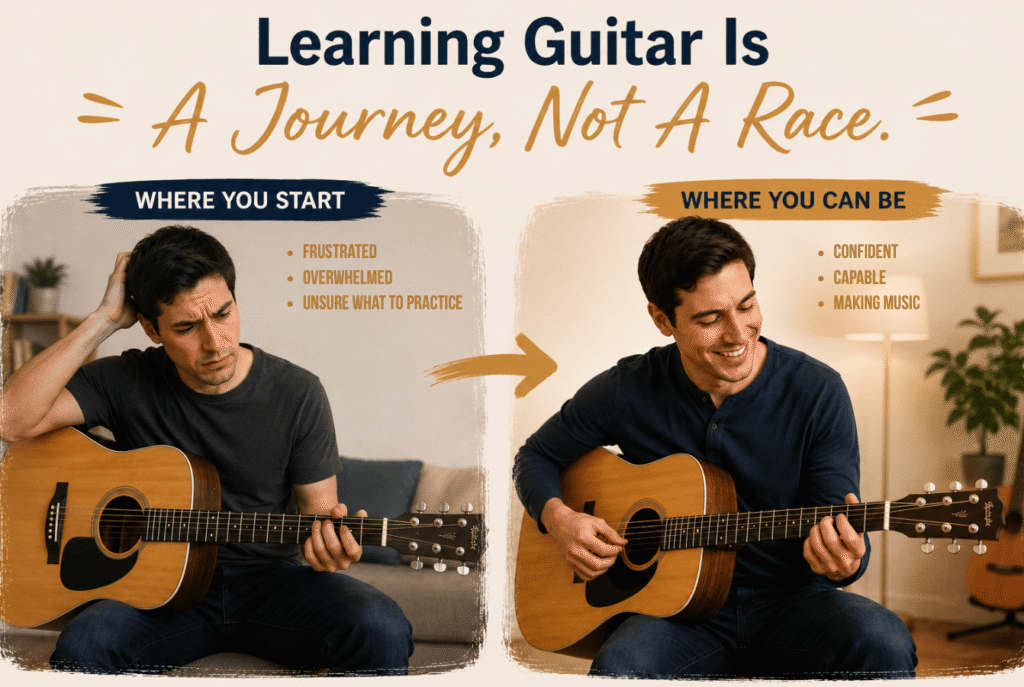
The truth is that learning guitar isn’t a destination. It’s a process. The good news is that you don’t have to master everything before you can start enjoying the instrument.
The First Few Weeks
Most beginners can learn a few basic chords, simple strumming patterns, and a handful of exercises within their first few weeks.
During this stage, you’ll be learning:
Many students are surprised by how much they can accomplish in a short amount of time. However, this is also the stage where many people become frustrated because their fingers hurt, chord changes feel awkward, and progress seems slower than expected.
This is completely normal. Every experienced guitar player has gone through the same phase.
One to Three Months
With regular practice, many students can begin playing simple songs within the first few months.
At this point, you’ll likely be able to:
This is often where guitar starts becoming truly enjoyable because you’re no longer just practicing exercises—you are making music.
Three to Six Months
After several months of consistent practice, most students begin to feel more comfortable with the instrument.
You may start learning:
You’ll also notice that many things that once required conscious effort begin to feel more natural. Your hands start cooperating with your brain.
This is an important milestone because confidence begins replacing frustration.
Six Months to One Year
By the end of the first year, many dedicated students can play a variety of songs, understand basic music theory, and perform comfortably for family and friends.
Students who practice consistently often develop:
What Matters More Than Time?
While people often focus on how long learning guitar takes, the more important question is: How do you practice during that time?
A student who practices 15 minutes every day will often make more progress than someone who practices two hours once a week.
Consistency beats intensity. Short, focused practice sessions performed regularly create better long-term results than occasional marathon sessions.
The Biggest Mistake Beginners Make
Many beginners assume they need to learn everything at once. They jump between YouTube videos, random exercises, scales, songs, and techniques without a clear plan.
This often leads to confusion and frustration.
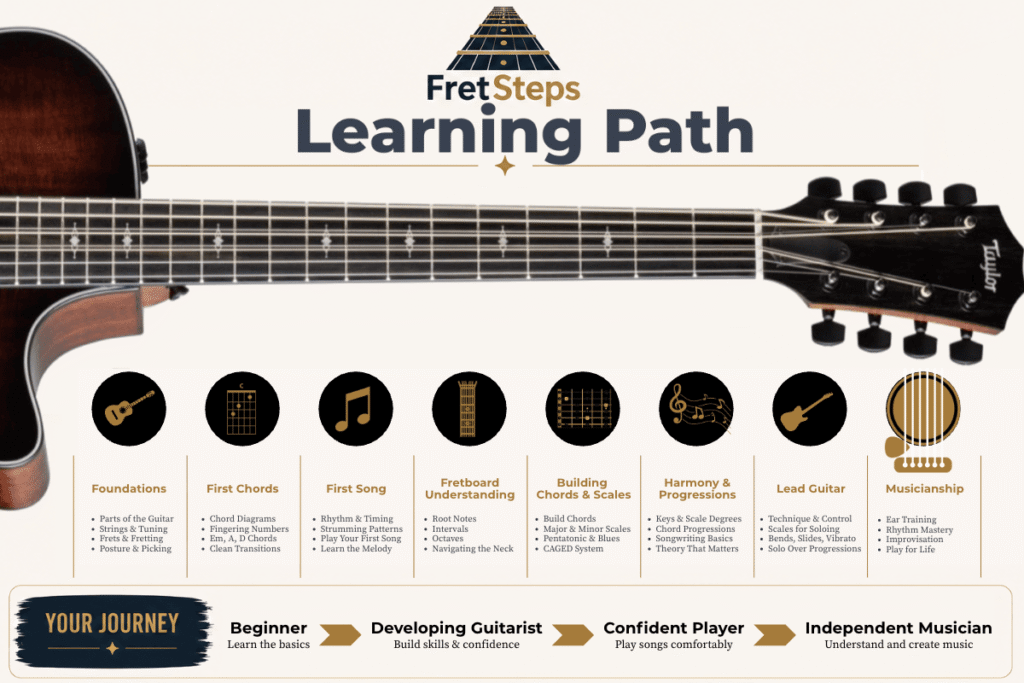
Learning guitar is much like building a house. You need a solid foundation before adding additional layers.
Students who follow a structured learning path typically progress faster because each skill builds naturally on the one before it.
Talent Is Overrated
Another misconception is that successful guitar players are simply more talented.
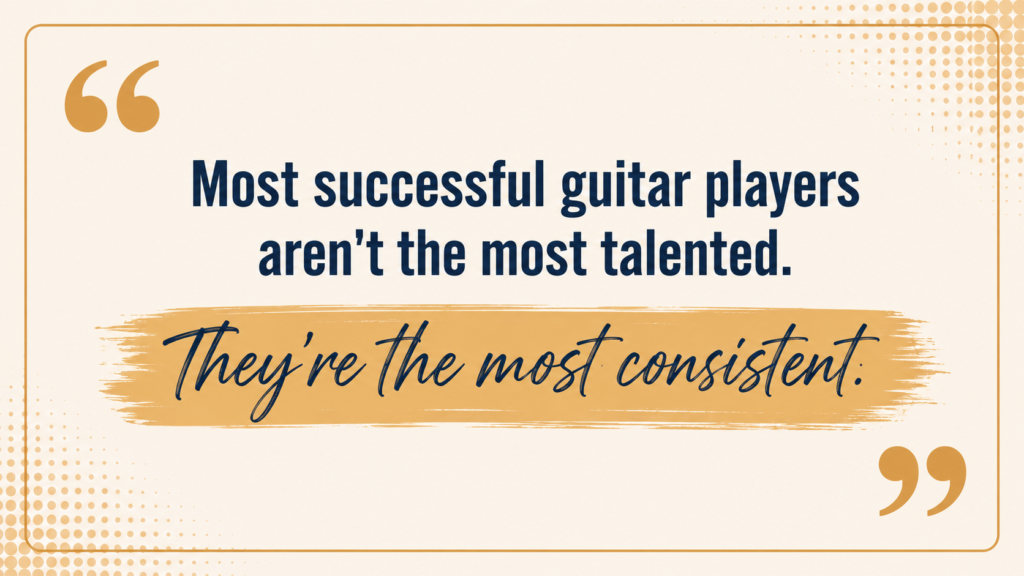
While natural ability can help, I’ve taught students of all ages and backgrounds over the years, and I’ve found that persistence matters far more than talent.
The students who succeed are usually the ones who:
They don’t necessarily learn faster than everyone else. They simply keep going.
So, How Long Does It Really Take?
Most students can begin playing simple songs within a few months.
Many become comfortable recreational players within a year.
Beyond that, growth continues for as long as you choose to keep learning.
The beautiful thing about guitar is that you don’t have to wait years to enjoy it. Every new chord, every new song, and every small breakthrough is part of the reward.
Learning guitar isn’t about reaching a finish line. It’s about making steady progress, building confidence, and enjoying the journey of making music.
If you’re willing to practice consistently and follow a clear path, you may be surprised by how much you can accomplish in your first year.
About the Author
Daryl is the creator of the FretSteps Guitar Method and has over 25 years of playing and teaching experience. He helps beginner and developing guitar players learn guitar through a structured, step-by-step approach designed to build confidence and lasting musical skills.